

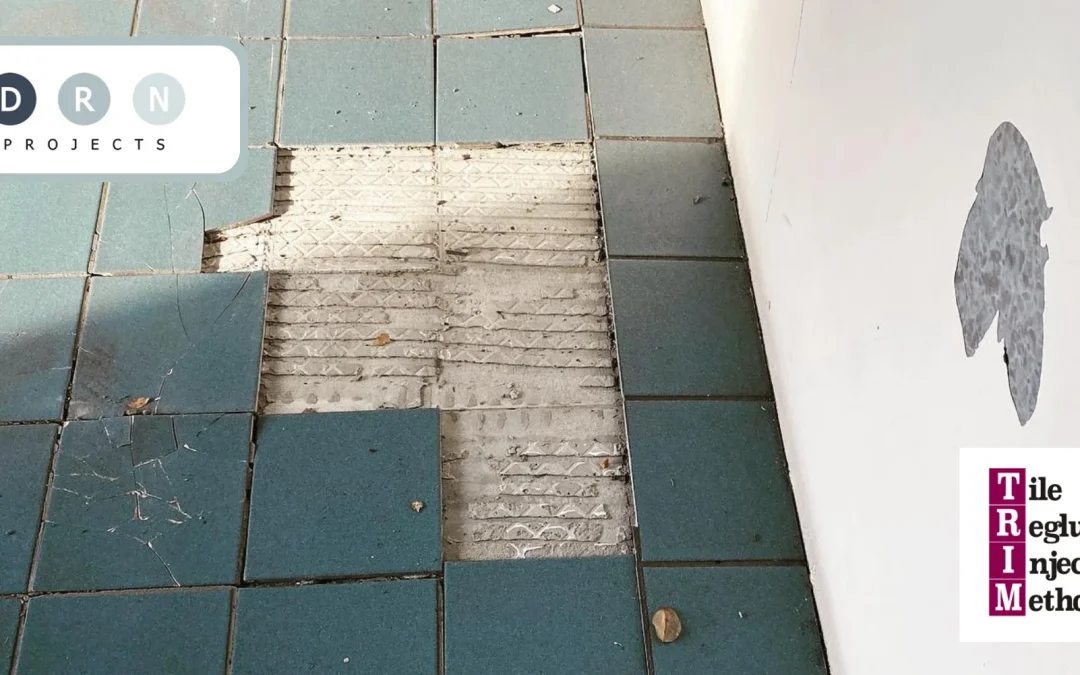
Loose tiles are frustrating enough. The problem feels even harder when you realise you do not have spare tiles stored away, or the original tile has been discontinued.
For homeowners, strata managers, and commercial property owners, this can quickly turn into a bigger worry. Will one loose tile mean replacing a whole section of flooring? Will the new tile match? Will the repair stand out? Will the area need to be shut down for days?
The good news is that loose tiles do not always need to be removed and replaced. In many cases, DRN Projects can help secure loose or drummy tiles without relying on spare tiles, which can save time, reduce disruption, and preserve the look of the existing floor.
Why spare tiles are often hard to find
Tiles change over time. A colour or pattern that was common ten years ago may no longer be available. Even when the same tile style can be found, new batches may not match the original perfectly.
This is especially common in older homes, apartment buildings, offices, resorts, and strata properties where the original tiles were installed years earlier. Flooring may still look good overall, but one or two loose tiles can create a problem if the exact replacement cannot be sourced.
That is why it is worth getting the issue assessed before assuming full replacement is the only option.
Loose does not always mean broken
A loose tile may still be intact. It might sound hollow when tapped, shift slightly underfoot, or feel unstable in one area. These are signs the tile may no longer be properly secured underneath.
If the tile itself is not cracked or broken, it may be suitable for a repair approach that keeps the existing tile in place. This is where DRN Projects’ T.R.I.M. service can be useful.
T.R.I.M. stands for Tile Reglue Injection Method. DRN Projects uses this method to positively refix debonded floor and wall tiles without removing them. Because the tile is repaired in place, scarce spare tiles or mismatched batches are often not needed.
Why this matters for property owners
When matching tiles cannot be found, replacing one tile can become more complicated than expected. A single replacement may stand out, which can lead people to replace a larger area just to make everything look consistent.
That can mean more cost, more waste, more downtime, and more disruption.
A repair first approach can help property owners avoid unnecessary replacement where the existing tiles are suitable for repair. This is particularly useful in:
Homes where the original tiles are no longer available
Apartment buildings with older shared areas
Office buildings and retail spaces where presentation matters
Hotels, resorts, and commercial properties where downtime needs to be managed
Strata properties where repairs need to be practical and cost conscious
When replacement may still be needed
Not every tile can be saved. If a tile is broken, badly cracked, or not suitable for repair, replacement may still be the right option.
DRN Projects assesses the tiled area first, identifies which tiles are loose, and advises whether repair or replacement is the most practical path forward. This helps property owners make decisions based on the condition of the tiles, rather than guessing.
Why early assessment helps
Loose tiles are easier to manage when they are picked up early. Leaving the issue can allow more tiles to become affected over time, particularly in busy areas or places exposed to moisture.
A quick inspection can help confirm whether the issue is isolated, whether surrounding tiles need to be checked, and whether T.R.I.M. may be suitable.
If you are worried because you do not have spare tiles, do not wait until the problem gets worse. There may be a way to repair the existing tiles and avoid unnecessary replacement.
Call DRN Projects
If you have loose or drummy tiles but no spare tiles available, DRN Projects can assess the area and recommend the most practical repair option.
Call 1300 291 217 or 07 5646 6344, or contact Dan Newnham on 0414 446 579.
Frequently Asked Questions
1. Can loose tiles be fixed if I do not have spare tiles?
Yes, in many cases. If the tile is still intact, DRN Projects may be able to complete loose tiles repair without removing the tile, which means spare tiles may not be needed.
2. What happens if the tile has been discontinued?
A discontinued tile does not automatically mean the whole floor needs replacing. If the tile is loose but not broken, DRN Projects can assess whether repair in place is suitable.
3. What is the best option for tile floor repair when matching tiles are unavailable?
The best option depends on whether the tile is intact or damaged. If it is intact but loose, repair may be possible. If it is broken, replacement may need to be considered.
4. Can DRN Projects help with drummy tile repair in older homes?
Yes. Drummy tiles are hollow sounding tiles, and they are common in older homes and buildings. DRN Projects can inspect the area and advise whether the tiles are suitable for repair.
5. Is loose tile repair less disruptive than replacing tiles?
It can be. When tiles can be repaired in place, there is usually less mess, less downtime, and less need to source matching tiles.
6. Does tile floor repair always involve removing the tile?
No. Some tile issues can be repaired without removing the tile, depending on the condition of the tile and the area being assessed.
7. What does drummy tile repair mean?
Drummy tile repair refers to fixing tiles that sound hollow because they are no longer fully secured underneath. DRN Projects can assess whether they can be repaired without removal.
8. Can loose tiles repair help avoid a larger flooring replacement?
Yes, when the tiles are suitable for repair. Acting early can help keep the repair contained and reduce the chance of needing to replace a larger section later.
9. How do I know if I need tile floor repair or tile replacement?
If the tile is loose but still intact, repair may be an option. If it is cracked, broken, or unsuitable for repair, replacement may be recommended after inspection.
10. Is drummy tile repair suitable for commercial properties too?
Yes. DRN Projects work with both residential and commercial properties, including areas where maintaining the existing floor appearance is important.