


Most people hear “tile repair” and picture jackhammers, dust everywhere, and rooms being out of action for days.
That can happen with full tile removal. However, it is not the only way.
In many cases, loose or hollow-sounding tiles can be addressed without tearing up the whole area. The difference usually comes down to two things.
First, choosing a repair approach that avoids demolition where possible. Second, having a team that plans the job properly so the space stays usable and safe.
Why some tile repairs get messy fast
Tile work becomes disruptive when tiles need to be removed. Removal often means noise, dust, waste, and the flow-on effect of replacing surrounding materials. That is why people delay getting it done, especially in lived-in homes or tenanted buildings.
The problem is that delays can turn a small repair into a bigger one: a loose tile can become a trip hazard, more tiles can loosen, and wet areas can be affected if water starts getting where it should not.
What “no mess, no stress” looks like in real life
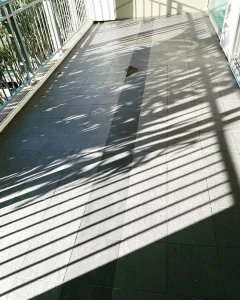
A low-disruption repair is usually possible when the tiles are still in place and the issue is mainly that they have come loose underneath. When that is the case, DRN Projects may be able to use the Tile Reglue Injection Method (TRIM) to resecure tiles without removing them.
The key benefits for everyday people are simple:
- Less noise
- Less mess
- Less downtime
- Less chasing matching tiles
In many cases, repairs can be done while the property is still occupied, which means you do not always have to move out or shut the space down. Treated tiles are often ready for general use within hours, although timeframes can vary depending on the area. This makes it much easier to get the issue sorted without turning it into a major disruption.
Why preparation matters as much as the method
Even with the right approach, the experience comes down to how the job is managed on-site.
- Clear communication: People want to know what will happen, how long areas need to be left alone, and what to avoid straight after repair.
- Protecting the space: A careful setup reduces the chance of adhesive or grout residue where it should not be.
- Staged work where needed: Sometimes it is better to repair sections so access is maintained, particularly in shared areas.
- Honest advice about when replacement is required: Not every tile can or should be repaired. Broken or badly damaged tiles may still need replacement, and it is better to know that early.
A better outcome without the drama
If you have been putting off tile repairs because you cannot deal with a major disruption, it is worth having the area assessed. You may not need a full rip-up. You may just need a targeted repair and a team who knows how to keep things tidy and organised.
Call DRN Projects
If you have loose, drummy, or damaged tiles and want a practical fix with minimal disruption, call DRN Projects on 1300 291 217 or 07 5646 6344, or reach out to Dan Newnham on 0414 446 579.
FAQs
1. What does floor tile TRIM mean when DRN Projects talks about tile repair?
In this context, TRIM refers to the Tile Reglue Injection Method, also known as T.R.I.M., which is used to resecure loose or hollow sounding tiles without full removal.
2. Can you fix drummy tiles without shutting down the whole room?
In many cases, yes. When tiles are still in place and suitable for repair, DRN can often fix drummy tiles with minimal disruption compared to full tile removal.
3. Is cracked tiles repair always possible, or do cracked tiles need replacing?
It depends on the tile and the cause. Some situations suit cracked tiles repair, while others may require replacement if the tile is broken or unsafe.
4. How do I know if I’m up for major remedial works or a smaller repair?
An inspection is the best first step. DRN can assess the tiles and advise if the issue is localised or if broader remedial works are needed.
5. Do you need spare tiles on hand before booking repairs?
Not always. One benefit of targeted repair methods is that they can reduce the need for immediate replacement. This can help when matching tiles are hard to find.
6. What are the early signs I should book an inspection?
Loose tiles underfoot, hollow sounds, cracking, or grout changes are all good reasons to arrange an inspection before the issue spreads.
7. Can you help tenants and homeowners who want minimal disruption?
Yes. DRN’s approach is often chosen by people who want repairs handled efficiently with less mess and downtime.
8. Does DRN work with people coordinating larger building maintenance?
Yes. DRN can assist across residential and commercial settings, including jobs that sit within construction project management gold coast schedules.
9. Is a residential project manager ever involved in tile repair planning?
Sometimes. A residential project manager may help coordinate access and timing where repairs are happening in occupied homes or mixed use buildings.
10. If I’m replacing cracked tiles in one area, should I check nearby tiles too?
Yes. If one section is failing, it is worth checking surrounding tiles for movement or hollow spots before you commit to replacing cracked tiles across a larger area.